Smile Makeovers
in
Jasper Avenue
- Home
- Prosthodontist Staging
Beautiful Smile Transformations
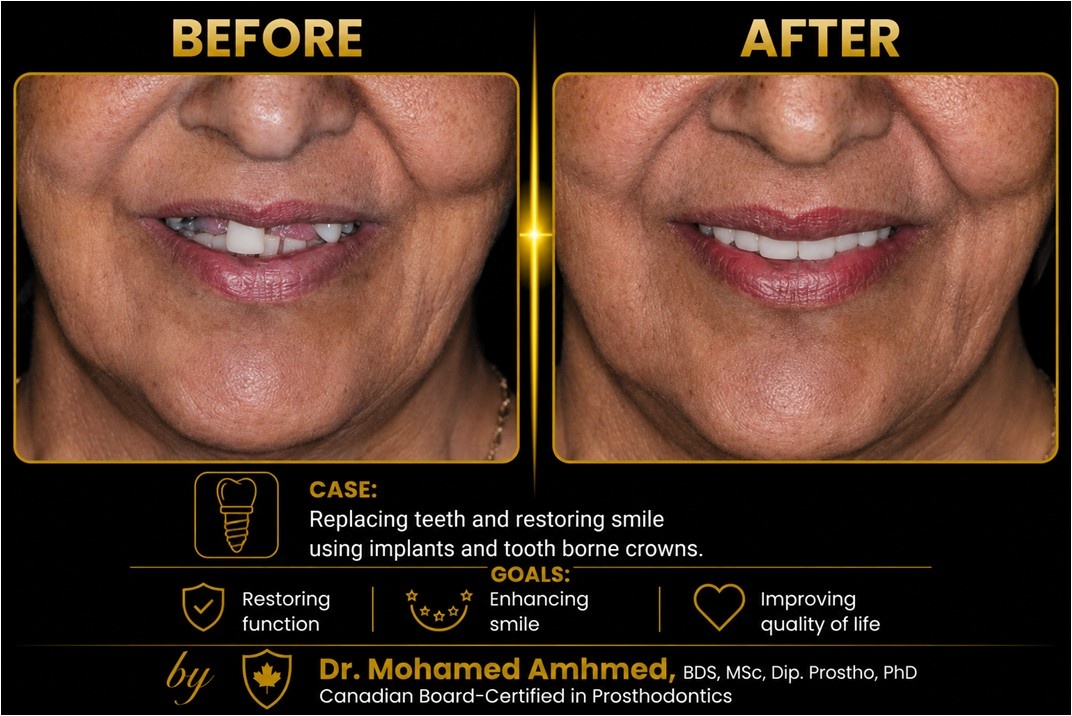
Anterior Implant Rehabilitation
Detailed Prosthodontic Planning
Digital Planning and Smile Evaluation
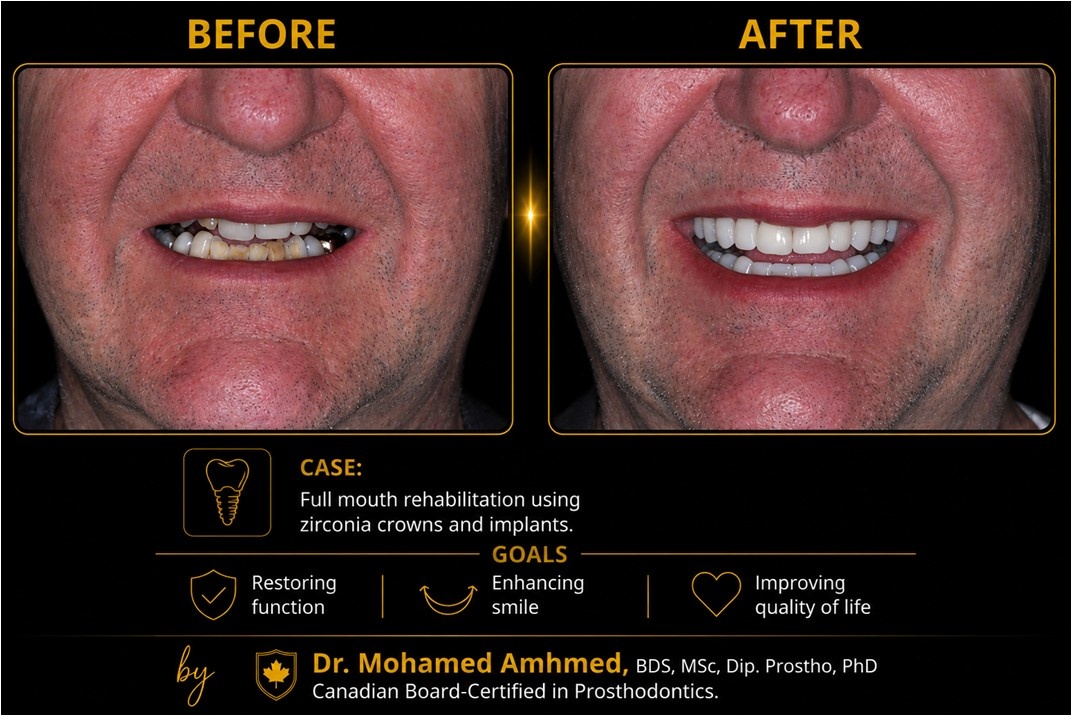
Full Mouth Rehabilitation Using Implant - Supported Restorations and Zirconia Crowns
Digital Smile Planning
Full Mouth Rehabilitation
Detailed Treatment Planning


Comprehensive Full Mouth Rehabilitation
Complex Full Mouth Rehabilitation
Interdisciplinary Treatment Planning

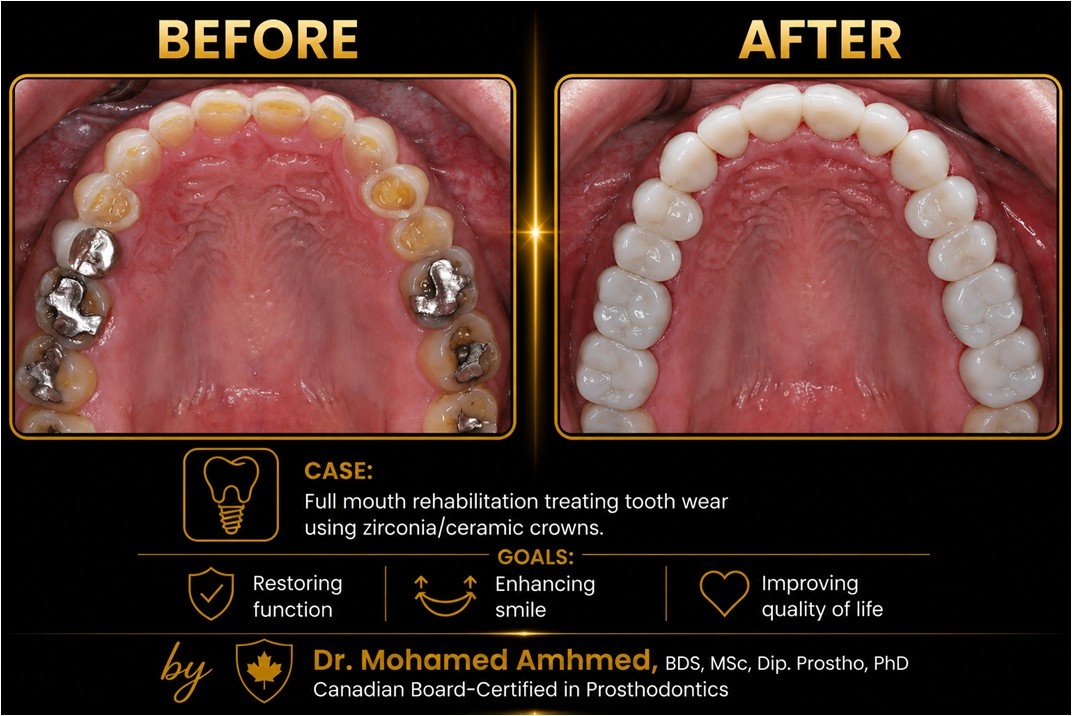

Full Mouth Rehabilitation for Tooth Wear Using Zirconia and Ceramic Restorations
Managing Significant Tooth Wear
Comprehensive Digital Workflow
Digital Planning and Provisional Restorations

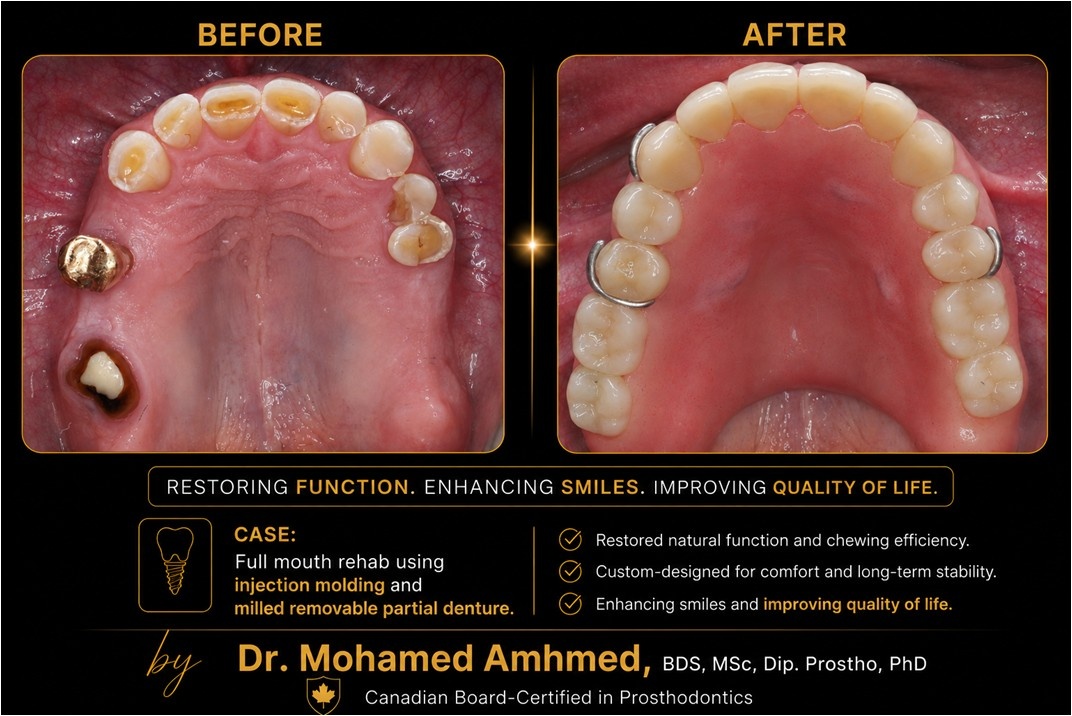
Full Mouth Rehabilitation Using Injection Molding and Digital Partial Denture Workflow
Comprehensive Prosthodontic Rehabilitation
Careful Digital Planning
Conservative Injection Molding Technique
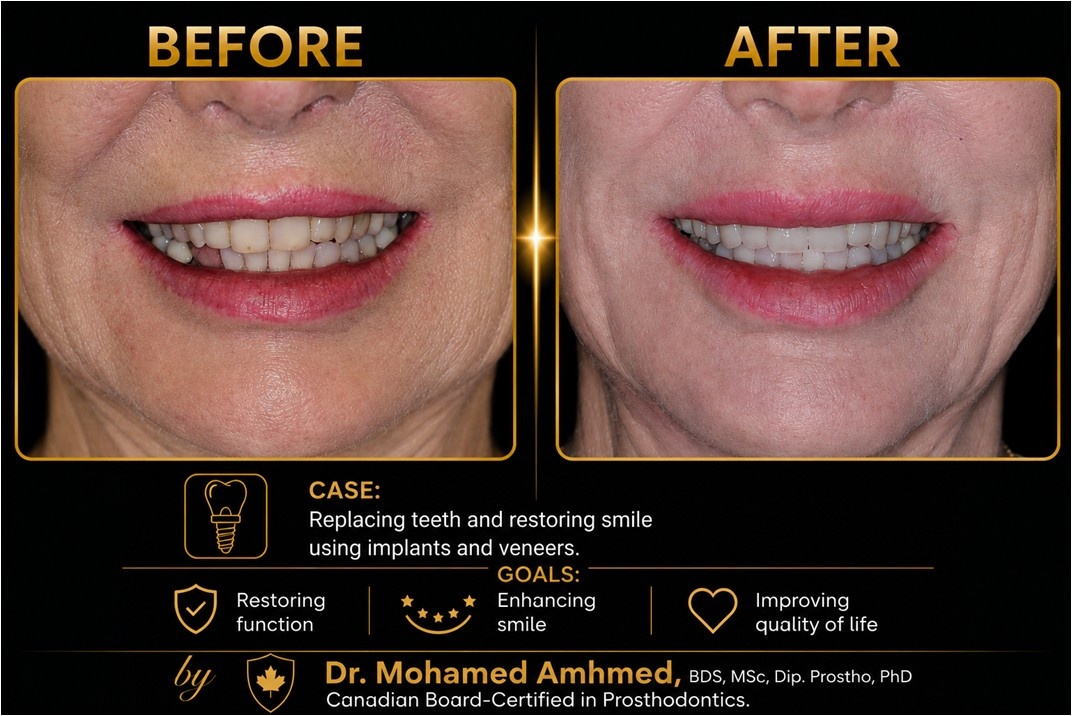
Implant and Veneer Rehabilitation
Implant and Veneer Rehabilitation
Ceramic Veneer Smile Rehabilitation
Careful prosthodontic and digital planning
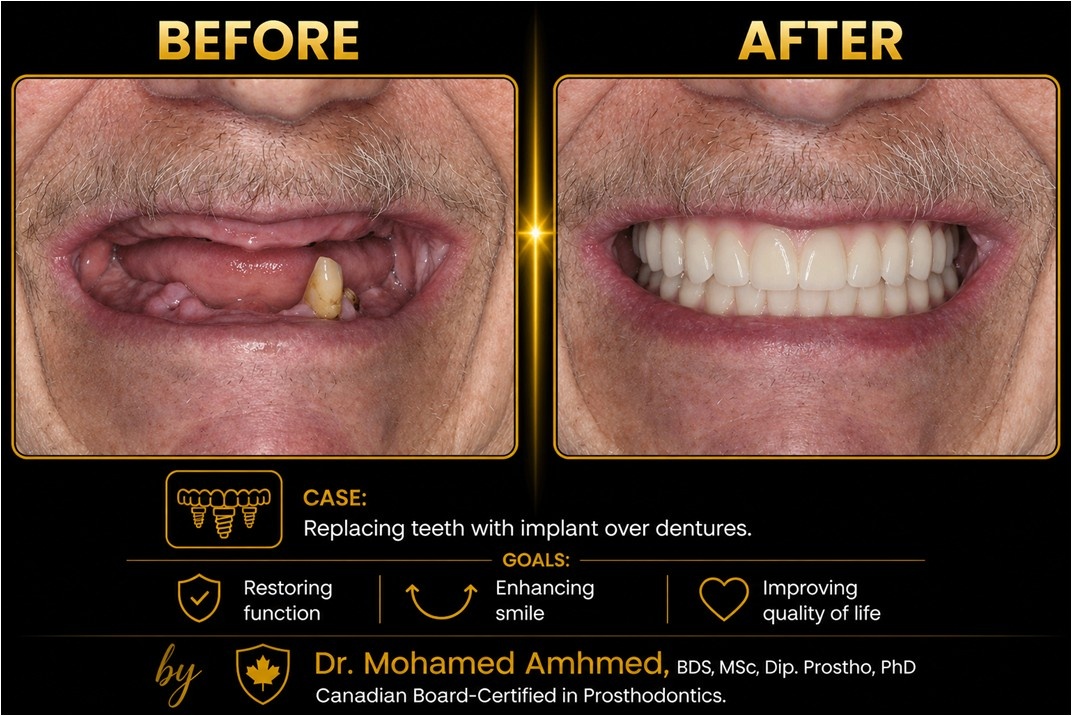
Implant Overdenture Rehabilitation
Implant Overdenture Rehabilitation
Digital Implant Planning and Rehabilitation
Careful Smile Evaluation
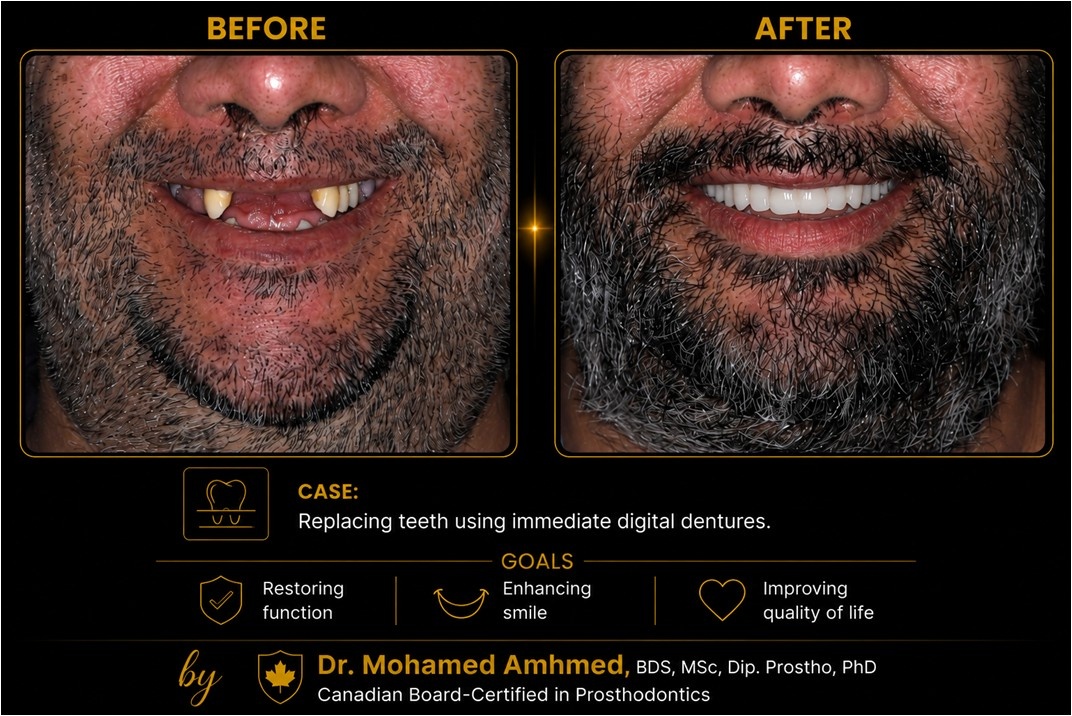
Immediate Digital Denture Rehabilitation
Immediate Denture Planning
Digital Workflow and Smile Planning
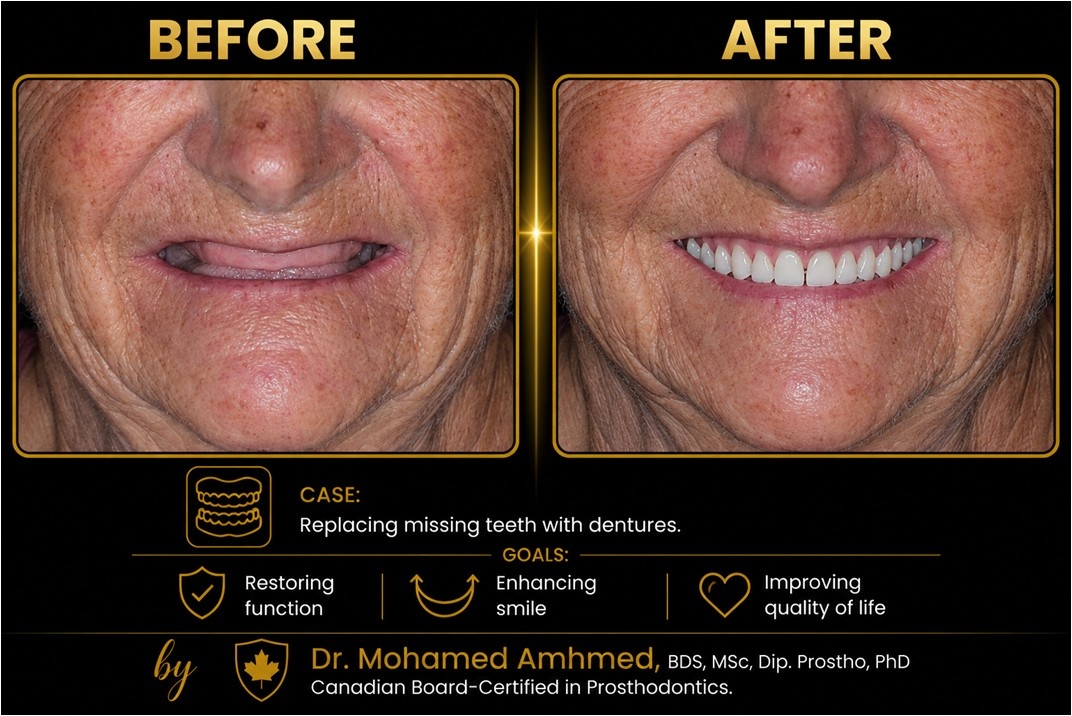
Complete Denture Rehabilitation
Complete Denture Rehabilitation
Comprehensive Prosthodontic Workflow
Personalized Smile Design
DIGITAL PROSTHODONTIC WORKFLOWS - PRECISION THROUGH TECHNOLOGY
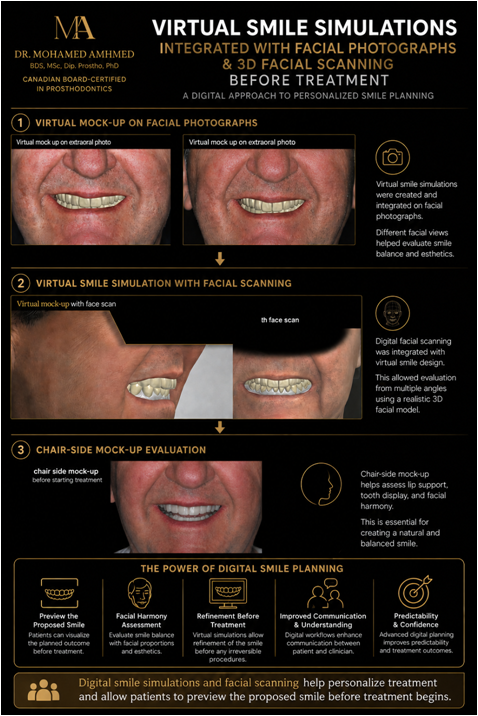
Virtual Smile Planning Workflow
- This digital workflow demonstrates how virtual smile simulations and 3D facial scanning can be integrated into restorative treatment planning before clinical treatment begins. By combining facial photographs, smile analysis, and digital mock-ups, proposed changes can be evaluated in relation to facial balance, tooth display, and overall esthetics before any irreversible procedures are performed.
- Digital facial scanning allows the planned smile design to be visualized on a three-dimensional facial model, helping improve precision and communication throughout the planning process. Chair-side mock-up evaluations further allow patients to preview the proposed smile directly in the mouth, supporting a more personalized and collaborative treatment experience. These digital workflows help improve treatment predictability, visualization, and patient understanding while supporting esthetic harmony, functional goals, and greater confidence throughout smile rehabilitation planning.
Digital Smile Design Workflow
- This digital smile design workflow demonstrates how advanced virtual planning can be used to evaluate smile balance, tooth proportions, facial harmony, and occlusion before treatment begins. Using digital analysis and virtual mock-ups, proposed changes can be carefully reviewed in advance to support a more personalized and predictable treatment process.
- The workflow combines facial evaluation, dental midline analysis, smile symmetry assessment, and virtual restorative planning to help guide treatment decisions while improving communication between the patient and clinician. A digital mock-up at the proposed vertical dimension allows patients to better visualize potential outcomes before any irreversible procedures are performed. By integrating digital technology into treatment planning, this approach helps support improved function, esthetics, comfort, and overall confidence throughout the rehabilitation process while supporting a more comfortable and predictable treatment experience.

Digitally Guided Smile Rehabilitation
- This digital workflow demonstrates how comprehensive smile rehabilitation can be carefully planned and evaluated before definitive treatment begins. Facial analysis, smile simulations, and digital scans were combined to assess esthetics, occlusion, restorative space, and overall function in a more comprehensive and patient-centered way.
- Using CAD/CAM technology and virtual treatment planning, prototype restorations were designed to help evaluate speech, bite relationships, smile balance, and comfort prior to final treatment. Digital functional and occlusal assessments were used to support greater restorative precision, stability, and treatment predictability. This step-by-step digital approach helps improve communication, treatment visualization, and clinical accuracy while allowing patients to better understand the proposed changes before irreversible procedures are completed. By integrating esthetics and function together, digital workflows can support improved comfort, confidence, functional harmony, and long-term restorative stability throughout the rehabilitation process.

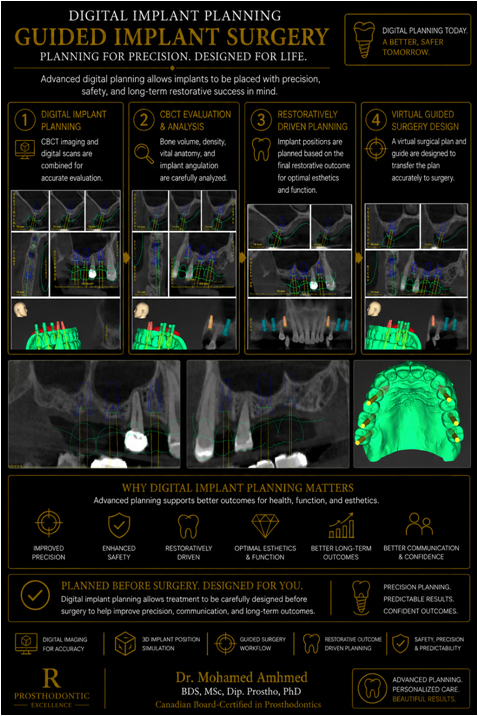
Digitally Guided Implant Surgery
- Successful implant treatment begins with careful planning long before surgery is performed. This digital implant planning workflow demonstrates how CBCT imaging and advanced digital technology can be used to evaluate bone anatomy, implant position, and restorative space with greater precision and accuracy.
- Using a restorative-driven approach, implant placement was virtually planned to support both long-term function and esthetics while helping improve surgical predictability. A digitally designed surgical guide was then created to help accurately transfer the treatment plan during implant surgery. This modern workflow helps improve precision, surgical accuracy, and treatment predictability throughout care while reducing uncertainty during the surgical process. By combining digital imaging with prosthodontic treatment planning, implant therapy can be designed to support improved stability, oral function, comfort, and overall patient confidence throughout the treatment journey.
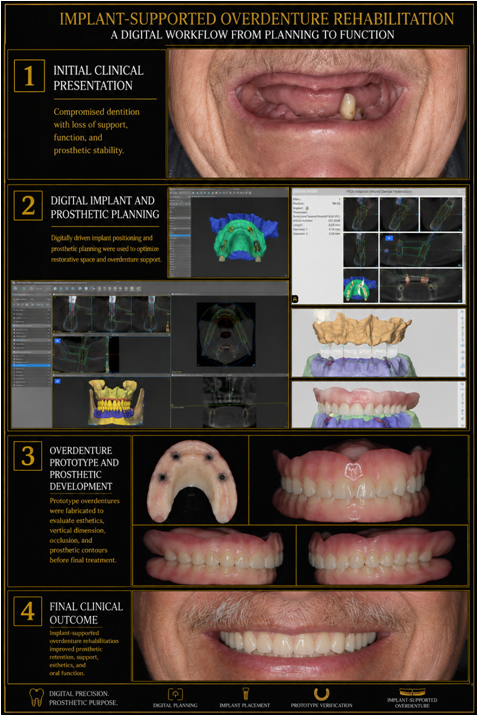
Implant-Supported Overdenture Workflow
- This digital workflow demonstrates how implant-supported overdenture rehabilitation can help restore stability, function, and comfort for patients with significant tooth loss and compromised dentition. Using digital implant planning, CBCT imaging, and prosthetically driven design, implant positions and restorative space were carefully evaluated before treatment began.
- Prototype overdentures were digitally designed and verified to assess esthetics, occlusion, vertical dimension, and prosthetic contours prior to finalization. This step-by-step digital workflow helps support greater precision, treatment predictability, and patient understanding throughout the rehabilitation process. Implant-supported overdentures can help improve denture stability, chewing efficiency, speech, and overall comfort compared with conventional removable dentures. By integrating digital technology into planning and treatment, patients are able to better understand the process while supporting greater confidence, comfort, and improved day-to-day function throughout rehabilitation.
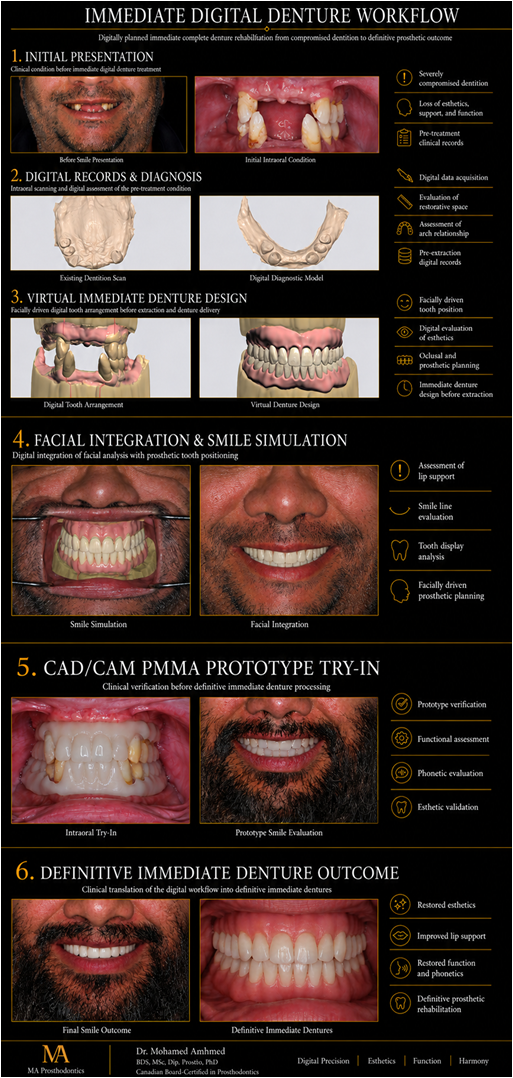
Immediate Digital Denture Workflow
- This digital workflow demonstrates how advanced planning and digital technology can be integrated into immediate denture rehabilitation for patients with severely compromised dentition and loss of function, support, and esthetics. Digital records, intraoral scans, and virtual denture design were used to evaluate restorative space, tooth positioning, facial support, and overall smile balance before extractions and denture delivery.
- Facially driven smile simulations and CAD/CAM PMMA prototype evaluations allowed esthetics, phonetics, vertical dimension, and function to be assessed prior to final processing. This digital workflow helps improve treatment visualization, clinical precision, and patient understanding while supporting a more predictable treatment experience. By carefully planning the prosthetic outcome before surgery, immediate dentures can help restore appearance, lip support, speech, and oral function more efficiently while supporting improved comfort, confidence, and day-to-day function throughout the rehabilitation process.
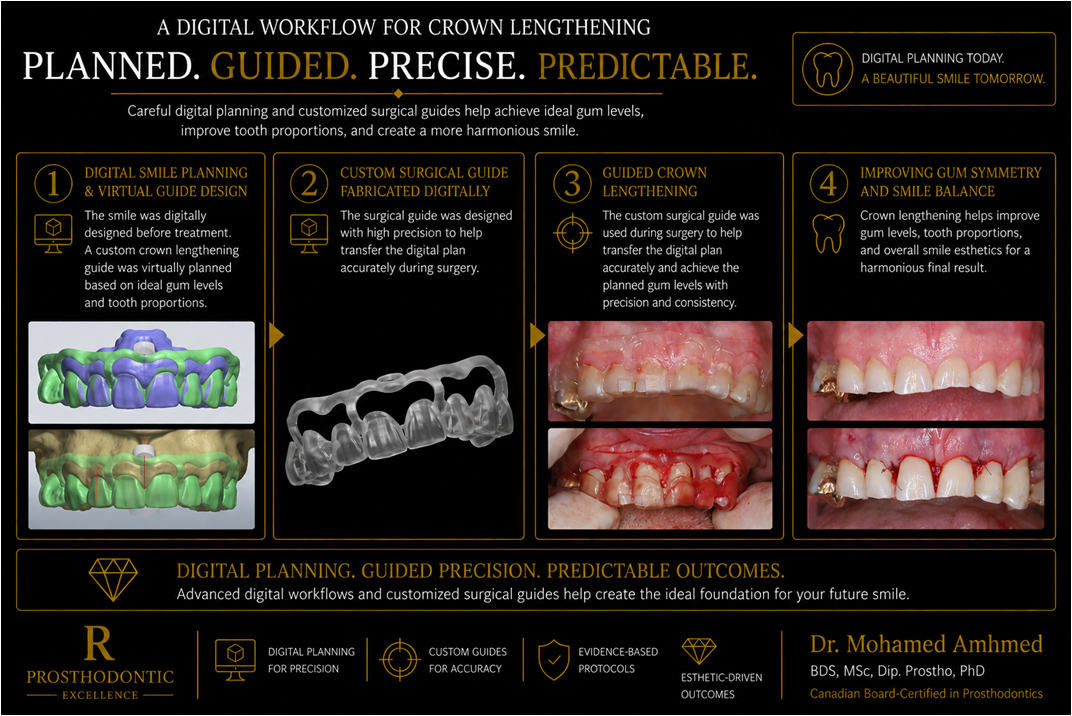
Digitally Guided Crown Workflow
- Some patients experience uneven gum levels or excessive gum display that can affect smile balance and tooth proportions. This case demonstrates how a digitally guided crown lengthening workflow can improve precision and help create a more harmonious smile foundation before restorative treatment.
- Using digital smile planning and customized surgical guide technology, the desired gum contours were planned virtually before treatment began. A custom guide was then fabricated to accurately transfer the digital plan during surgery, helping improve consistency and precision throughout the procedure. This modern workflow supports improved smile symmetry, restorative planning, and a more predictable treatment experience while minimizing unnecessary guesswork during surgery. By combining digital technology with prosthodontic treatment planning, the final result was designed to improve both smile esthetics and long-term restorative stability.
Your Dream Smile is More Affordable Than You Think
Calculator Information
The Equipment Finance Calculator calculates the type of repayment required, at the frequency requested, in respect of the loan parameters entered, namely amount, term and interest rate. The Product selected determines the default interest rate for personal loan product. The Equipment Finance Calculator also calculates the time saved to pay off the loan and the amount of interest saved based on an additional input from the customer. This is if repayments are increased by the entered amount of extra contribution per repayment period. This feature is only enabled for the products that support an extra repayment. The calculations are done at the repayment frequency entered, in respect of the original loan parameters entered, namely amount, annual interest rate and term in years.
Calculator Assumptions
Length of Month
All months are assumed to be of equal length. In reality, many loans accrue on a daily basis leading to a varying number of days interest dependent on the number of days in the particular month.
Number of Weeks or Fortnights in a Year
One year is assumed to contain exactly 52 weeks or 26 fortnights. This implicitly assumes that a year has 364 days rather than the actual 365 or 366.
Rounding of Amount of Each Repayment
In practice, repayments are rounded to at least the nearer cent. However the calculator uses the unrounded repayment to derive the amount of interest payable at points along the graph and in total over the full term of the loan. This assumption allows for a smooth graph and equal repayment amounts. Note that the final repayment after the increase in repayment amount.
Rounding of Time Saved
The time saved is presented as a number of years and months, fortnights or weeks, based on the repayment frequency selected. It assumes the potential partial last repayment when calculating the savings.
Amount of Interest Saved
This amount can only be approximated from the amount of time saved and based on the original loan details.
Calculator Disclaimer
The results from this calculator should be used as an indication only. Results do not represent either quotes or pre-qualifications for the product. Individual institutions apply different formulas. Information such as interest rates quoted and default figures used in the assumptions are subject to change.
Loan Calculator
**Note: For exceeding 120 no. of payments, a group of 12 payments will be combined into a single payment number for better chart visibility.
| Period | Payment | Interest | Balance |
|---|